Utah Substance Abuse Statistics

4 Utah Drug Abuse Statistics Families Should Know

Utah’s substance abuse statistics show a clear pattern: overdose risk remains serious, fentanyl has changed the danger level, and alcohol-related harm is still a major concern even in a state with lower drinking rates. If these numbers feel personal, the safest next step is to talk with someone who can help you understand detox, treatment, insurance, and admissions options without pressure.

Updated: April 26, 2026

Quick Answer: What Do Utah Drug Abuse Statistics Show?

Utah substance abuse data shows that overdose deaths remain high, fentanyl is now one of the most dangerous drug threats, and alcohol continues to cause preventable harm across families and communities. The most important takeaway is not fear — it is timing: getting help earlier can lower risk before substance use becomes a crisis.

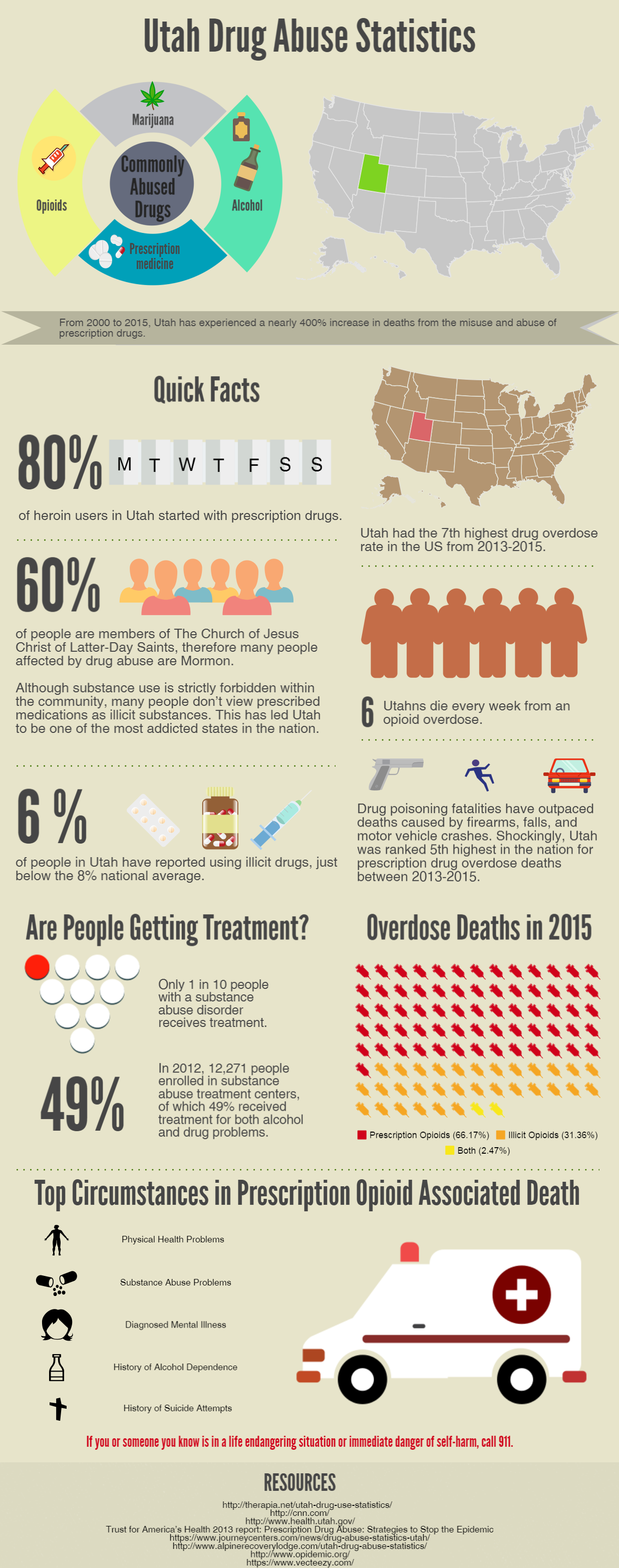
606 drug overdose deaths were reported in Utah in 2023, the highest number reported at that time.
47.9% of Utah drug overdose deaths in 2023 involved fentanyl.
10 Utahns die each week from drug overdose, according to Utah public health reporting.
903 Utahns are estimated to die from alcohol-attributable causes each year.

4 Utah Substance Abuse Statistics That Matter Most

Statistics are helpful only when they make the next step clearer. These four facts show why families should take opioid use, fentanyl exposure, alcohol misuse, and escalating substance use seriously.

1. Utah Reported 606 Drug Overdose Deaths in 2023

Utah DHHS reported 606 drug overdose deaths in 2023, a 14.3% increase from the year before. That means overdose is not a rare, distant problem — it is affecting Utah families, communities, and workplaces.

For families, the warning sign is escalation. If someone is using more often, mixing substances, hiding use, experiencing withdrawal, or saying they can stop but repeatedly cannot, it may be time to talk about professional help.

2. Fentanyl Was Involved in Nearly Half of Utah Overdose Deaths in 2023

Utah DHHS reported that fentanyl was involved in 47.9% of drug overdose deaths in 2023. Fentanyl is especially dangerous because it can be present in counterfeit pills or mixed with other substances without the person knowing.

This is why “they only use pills sometimes” or “they do not think it is fentanyl” is not enough reassurance. Today’s drug supply can make occasional or hidden use much more dangerous than families expect.

3. Utah Public Health Data Says About 10 Utahns Die Each Week From Drug Overdose

Utah IBIS reports that about 10 Utahns die each week from drug overdose and identifies drug poisoning deaths as a leading cause of injury death in the state.

This statistic matters because overdose risk is not only tied to “severe” addiction. Risk can increase when someone returns to use after a break, mixes alcohol with opioids or benzodiazepines, uses alone, or has untreated mental health symptoms.

4. Alcohol Still Causes Serious Harm in Utah

Utah has lower overall drinking rates than many states, but alcohol-related harm is still significant. Utah alcohol indicator data estimates that 903 Utahns die from alcohol-attributable causes each year, and 12.8% of Utah adults reported binge drinking in 2022.

Alcohol can be overlooked because it is legal and socially accepted. But frequent binge drinking, withdrawal symptoms, blackouts, relationship damage, DUIs, liver concerns, or drinking to manage anxiety, depression, trauma, or stress can all signal that treatment support may be needed.

What These Statistics Mean for Families

The biggest mistake families make is waiting for the situation to become “bad enough.” In reality, the safest window to ask for help is often before a crisis — when warning signs are present but the person is still reachable.

What You Notice What It May Mean Possible Next Step
Using pills, opioids, fentanyl, heroin, meth, cocaine, or multiple substances Overdose risk may be higher, especially with fentanyl or mixed substances Talk with admissions about detox and residential treatment options
Drinking heavily, hiding alcohol, blacking out, or drinking in the morning Alcohol dependence or withdrawal risk may be developing Ask whether medical detox may be safer than stopping alone
Depression, anxiety, trauma symptoms, mood swings, or panic with substance use Substance use and mental health symptoms may be reinforcing each other Consider dual diagnosis treatment with mental health support
Repeated promises to stop followed by relapse Willpower alone may not be enough; structured care may be needed Explore residential, PHP, IOP, and aftercare planning

When Substance Use Becomes More Serious

Substance use becomes more serious when it starts affecting safety, health, relationships, work, school, finances, parenting, legal stability, or mental health. The person may still look functional on the outside while their life is becoming harder to manage privately.

Common Warning Signs

  • Using more than intended or being unable to cut back.
  • Withdrawal symptoms, cravings, shaking, sweating, nausea, anxiety, or insomnia when not using.
  • Mixing alcohol, opioids, benzodiazepines, stimulants, or other substances.
  • Using alone or hiding how much they use.
  • Repeated conflict with family, work, school, or legal responsibilities.
  • Depression, trauma symptoms, panic, or mood instability alongside substance use.

Emergency Safety Note

If someone is unconscious, struggling to breathe, turning blue or gray, having a seizure, talking about suicide, acting violently, or appears medically unstable, call 911 or go to the nearest emergency room. This page is educational and is not a substitute for emergency medical care.

What Treatment Can Help With

Effective treatment is not just about stopping substance use for a few days. It is about stabilizing the body, understanding the pattern, treating mental health symptoms when present, building relapse prevention skills, and creating a step-down plan that supports real life after treatment.

Alpine Recovery Lodge Treatment Path

Why Alpine Is Different

Alpine Recovery Lodge is a trauma-informed addiction and mental health treatment center that helps clients and families understand what level of care may be appropriate. The goal is to create a safe, structured path forward — not to pressure someone into a decision before they understand their options.

If Alpine is not the right fit, the admissions team can still help you understand what kind of support may be safer.

What Should I Do Next?

If these Utah substance abuse statistics remind you of yourself or someone you love, the next step depends on how urgent the situation feels.

If You Are Unsure

Start with a private conversation. Ask admissions what level of care usually fits the symptoms, substance use pattern, and safety concerns you are seeing.

If You Are Ready

Verify insurance and ask what treatment could look like. You can learn about cost, timing, detox needs, and admissions without committing immediately.

If It Feels Urgent

Call now. If there is immediate danger, call 911 first. If the person is medically stable but the situation is escalating, Alpine can help you understand safe next steps.

Printable Family Checklist

Print this page or save it as a PDF so your family can review the warning signs, statistics, and next-step options together.

FAQ: Utah Drug Abuse Statistics and Treatment

What is the biggest drug threat in Utah right now?

Fentanyl is one of the most serious drug threats in Utah because it is highly potent and may be present in counterfeit pills or mixed with other substances. Utah DHHS reported that fentanyl was involved in 47.9% of drug overdose deaths in 2023.

Are Utah overdose deaths getting better or worse?

Utah DHHS reported 606 drug overdose deaths in 2023, a 14.3% increase from the year before. Even when national overdose trends improve, Utah families should still take overdose risk seriously.

Does alcohol abuse matter in Utah if fewer people drink?

Yes. Utah may have lower drinking rates than many states, but alcohol still causes significant harm. Utah alcohol indicator data estimates that 903 Utahns die from alcohol-attributable causes each year.

When should someone consider detox?

Detox may be needed when a person has withdrawal symptoms, uses alcohol heavily, uses opioids or benzodiazepines, mixes substances, or has medical or mental health concerns. Stopping suddenly can be unsafe for some substances, so it is best to ask a qualified treatment or medical professional.

Can Alpine Recovery Lodge help with both addiction and mental health?

Yes. Alpine Recovery Lodge provides addiction treatment and dual diagnosis support for people whose substance use overlaps with depression, anxiety, trauma, mood symptoms, or other mental health concerns.
What happens after I verify insurance?

After insurance verification, Alpine can help explain your benefits, possible treatment options, timing, and next steps. Verifying insurance does not force you to admit; it simply gives you clearer information.

You Do Not Have to Wait for a Crisis

Utah substance abuse statistics are not just numbers. They represent families who needed help, people who waited too long, and situations where earlier support may have changed the outcome. If you are worried about yourself or someone you love, Alpine Recovery Lodge can help you understand the safest next step.

If You’re Unsure What to Do Next

If you’re not sure which level of care is right, you don’t have to figure it out alone. Our admissions team will take the time to listen, answer your questions, and walk you through the options based on your situation.

There’s no pressure and no obligation—just a supportive conversation to help you understand what care may be most appropriate and what next steps could look like.

Call Alpine Recovery Lodge to talk with someone who can help you decide.
Confidential support is available.